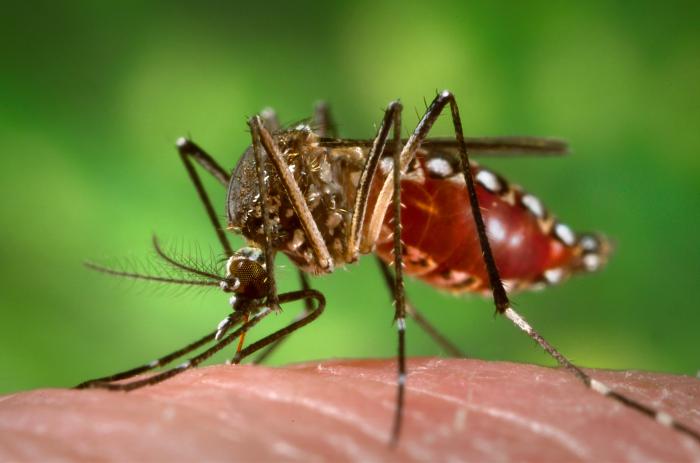
Mosquitoes
Mosquito Control in Council Bluffs, IA
Sitting on the Missouri River floodplain, Council Bluffs gets real mosquito pressure through the humid summer, off the river bottoms and the water in your own yard.
Mosquito control in Council Bluffs starts with geography. The town sits on the Missouri River floodplain, with river bottoms, backwaters, and low ground that hold water through a hot, humid Iowa summer, and mosquitoes need only a small amount of still water to breed. The regional pressure is real, but most of the mosquitoes biting on a given patio grew up much closer, in the water sitting in the yard itself, which is the part you can actually change.
Why the river bottoms drive the pressure
Mosquitoes breed in standing water, and few settings offer more of it than the Missouri River floodplain that Council Bluffs sits on. The river bottoms, backwaters, drainage ditches, and low-lying ground west and south of town hold shallow water through the season, and a wet summer or a river rise leaves floodwater pools that produce mosquitoes in waves. Add the humid heat, which lets a mosquito go from egg to adult in about a week, and the town produces them from late spring well into fall.
That regional water is why a home near the river bottoms, a creek, or low ground feels steady mosquito pressure no matter what it does. But the floodplain is the background level. The mosquitoes actually biting in a backyard usually came from water much closer to the door, which is where control has the most effect.
The yard is where the biting starts
As big as the river bottoms are, most of the mosquitoes on a given patio grew up within a few steps of it. A plugged gutter, a plant saucer, a bucket, a tarp fold, or a low spot that stays wet can each breed hundreds of mosquitoes close to the house. That is the good news, because the yard is the part you control, and walking the property once a week to tip out standing water breaks the cycle before the larvae ever fly.
- Clogged gutters, plant saucers, buckets, tarps, and toys that hold water after rain or watering
- A neglected or green pool, a rain barrel, or a low spot that stays wet for days
- Bird baths, pet bowls, and clogged drains that go unchanged for a week or more
- Dense shrubs, tall grass, and shady ivy where adult mosquitoes rest through the heat of the day
- Water in a corrugated downspout extension, a wheelbarrow, or a boat or trailer cover
How a local exterminator reduces them
A yard mosquito program adds two things to your own weekly water dumping. First, a larvicide in the standing water that cannot be drained, which stops the larvae before they become biting adults. Second, a targeted treatment of the shady resting areas, the dense shrubs, tall grass, and ivy where adult mosquitoes shelter during the day, which knocks down the biting population around the parts of the yard people actually use.
For a home near the river bottoms, a creek, or low ground, where the outside pressure never fully stops through the humid summer, this becomes a seasonal routine rather than a one-time spray. An experienced local exterminator also points out the yard sources worth removing, since cutting the breeding close to the house is what makes each treatment last longer.
The health angle
Mosquitoes here are not only a nuisance. West Nile virus shows up in Iowa most summers, carried by mosquitoes that breed in the same ordinary standing water found around the river bottoms and in backyards. Reducing where they breed has a real payoff beyond comfort, especially for households spending evenings outdoors through the warm months.
The practical takeaway is that the two most effective steps, removing standing water and reducing the shady resting spots, are the same ones that protect against the health risk. A mosquito program built around those, kept up through the season, is what actually lowers the pressure on a Council Bluffs property.
Read more on what pest control costs in Council Bluffs, or call 712-220-7876 and describe what you are seeing.
Related
People who called about this also called about
Questions
Mosquitoes in Council Bluffs, answered
Why are mosquitoes so bad near the river?
Council Bluffs sits on the Missouri River floodplain, and the river bottoms, backwaters, and low ground hold the standing water mosquitoes breed in. A wet summer or a river rise adds floodwater pools. Homes near that water feel steady pressure, though much of the biting still comes from water closer to the house.
What is the single most effective thing I can do?
Walk the yard once a week and tip out everything holding water: gutters, plant saucers, buckets, tarps, toys, bird baths, and low spots. Most of the mosquitoes biting on your patio grew up within a few steps of it, so removing that standing water breaks the cycle before the larvae fly.
Does yard mosquito treatment actually work?
It helps when it targets both stages: a larvicide in standing water that cannot be drained, and a treatment of the shady shrubs and tall grass where adults rest during the day. Near the river bottoms the outside pressure never fully stops, so it works best as a seasonal routine paired with removing yard water sources.
Are mosquitoes here a health risk?
West Nile virus appears in Iowa most summers, spread by mosquitoes that breed in ordinary standing water around homes and the river bottoms. Reducing breeding sites and the shady resting areas lowers both the nuisance and the health risk, which is why those steps are the core of any program.
Talk to a local exterminator
Call and describe your pest problem
Tell us the pest, the property and how long it has been going on. You get straight answers and an honest estimate before any work starts. No obligation.
Calls answered 7am to 9pm, seven days a week