Overwintering Invaders
Boxelder Bug and Cluster Control in Council Bluffs, IA
The Midwest signature: when it turns cold, boxelder bugs and Asian lady beetles pile on warm walls and push inside, with cluster flies and crickets right behind.
Boxelder bug and cluster control is the pest problem that defines fall in Council Bluffs. As the first cold nights arrive, a wave of overwintering insects looks for a warm place to spend the winter, and the sunny south and west walls of a house are the target. Boxelder bugs and Asian lady beetles pile up on the siding by the hundreds, then work their way inside through gaps, while cluster flies and fall crickets do the same thing in their own way. It is seasonal, it is predictable, and it is best handled before the cold hits.
The overwintering wave, and why it hits here
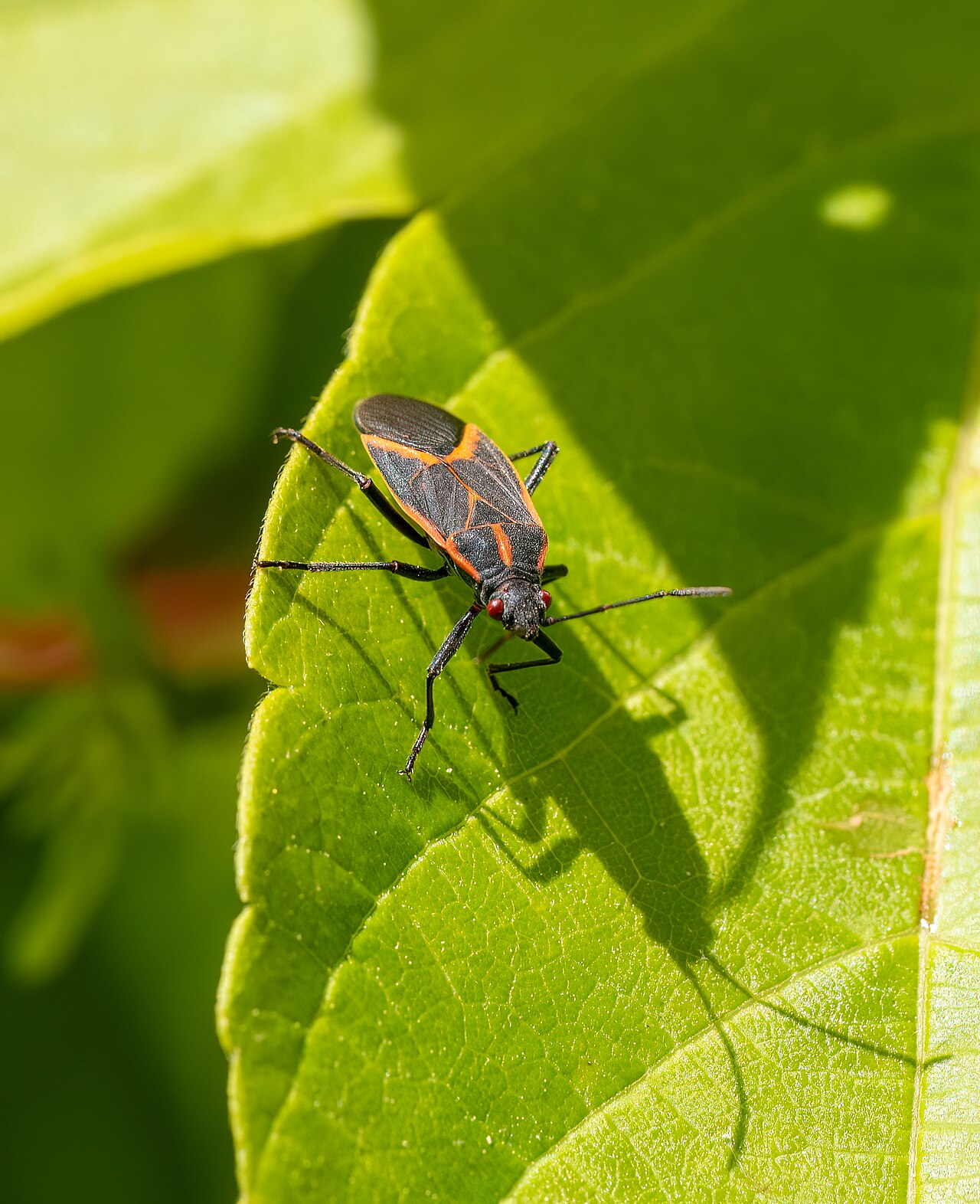
Boxelder bugs are the black and orange insects, about half an inch long, that gather in big numbers on warm walls in fall. They feed on boxelder and maple seeds through the summer, and when the weather cools they cluster on the sunny south and west sides of buildings to soak up heat, then squeeze into gaps around windows, siding, and the roofline to overwinter in wall voids and attics. Asian lady beetles do the exact same thing: the orange ladybug lookalikes swarm sunny walls and windows in fall and push inside to spend the winter, sometimes leaving a stain and a faint odor when disturbed.
Cluster flies and fall crickets round out the group. Cluster flies are sluggish gray flies that gather in upstairs rooms and wall voids and reappear at windows on warm winter days, and crickets and other fall invaders move toward the warmth of the foundation as the nights cool. Council Bluffs sits in prime habitat for all of them, with mature trees, open ground, and a real four-season climate that gives these insects a strong reason to come indoors every autumn.
What the fall invasion looks like
The frustrating part is the timing. These insects do not damage the house or breed indoors; they are simply overwintering, but once they are in the wall voids and attic, they trickle into living space through the winter and again in spring when they try to get back out. Vacuuming the ones you see does nothing about the hundreds already tucked into the structure, which is why the fix is about the exterior and the timing.
- Boxelder bugs, black with orange markings, massed on sunny south and west walls in fall
- Orange Asian lady beetles clustering at windows, siding gaps, and in the attic to overwinter
- Sluggish gray cluster flies gathering in upstairs windows and reappearing on warm winter days
- Crickets and other insects pushing toward the warm foundation as the first cold nights arrive
- Insects turning up indoors at windows through the winter, then again in spring as they try to leave
How a local exterminator handles it
The work that actually reduces a fall invasion is an exterior perimeter treatment timed to late summer and early fall, before the insects cluster and move in. An experienced local exterminator treats the sunny south and west walls, the eaves and soffits, around windows and doors, and the other gaps where these insects gather and enter, so the wave hits a treated surface instead of an open building. Timing is everything, because once they are inside the walls, treatment options are limited to managing what comes into the living space.
Exclusion is the other half and the part that lasts. Sealing gaps around windows, siding, utility penetrations, and the roofline, and repairing torn screens and worn door sweeps, closes the routes these insects use. For a home with a lot of sunny wall, mature trees nearby, or a history of fall clusters, the exterior treatment plus sealing becomes a yearly routine that heads off the invasion rather than fighting it indoors all winter.
Why timing beats spraying indoors
Once boxelder bugs, lady beetles, and cluster flies are inside the wall voids and attic, spraying indoors accomplishes very little and can leave dead insects in the walls that attract other pests. The population is protected in the structure, and the insects simply keep trickling out at windows through the season. That is why indoor spraying is the wrong tool for this problem.
The whole advantage is in the fall, on the outside of the house, before they settle in. A perimeter treatment and sealing done in late summer or early fall stops the wave at the wall. Miss that window and the realistic plan for the winter is managing the stragglers indoors and doing the exterior work the following fall to prevent a repeat.
Read more on fall pest-proofing in Council Bluffs, or call 712-220-7876 and describe what you are seeing.
Related
People who called about this also called about
Questions
Boxelder Bugs & Cluster Pests in Council Bluffs, answered
What are the black and orange bugs all over my south wall?
Those are boxelder bugs. In fall they gather on warm sunny south and west walls to soak up heat before pushing into gaps to overwinter in the walls and attic. They do not damage the house or breed indoors, but they trickle into living space through winter. An exterior treatment and sealing in fall is what reduces them.
Why do ladybugs get in my house every fall?
They are Asian lady beetles, an orange ladybug lookalike that overwinters inside structures. Like boxelder bugs, they cluster on sunny walls in fall and squeeze inside through gaps. Sealing entry points and a timed exterior perimeter treatment before they cluster is the effective approach.
Can you just spray them inside once they are in?
Indoor spraying does very little once they are in the wall voids and attic, and it can leave dead insects in the walls. The population is protected in the structure and keeps trickling out at windows. The real fix is an exterior treatment and sealing done in fall, before they move in.
When should I schedule this?
Late summer to early fall, before the first cold nights push them onto the walls and inside. That timing lets the exterior treatment and sealing stop the wave. Once they are already in the walls for winter, the options are limited to managing the stragglers and preventing next year.
Talk to a local exterminator
Call and describe your pest problem
Tell us the pest, the property and how long it has been going on. You get straight answers and an honest estimate before any work starts. No obligation.
Calls answered 7am to 9pm, seven days a week