Learn
Boxelder Bugs in Council Bluffs
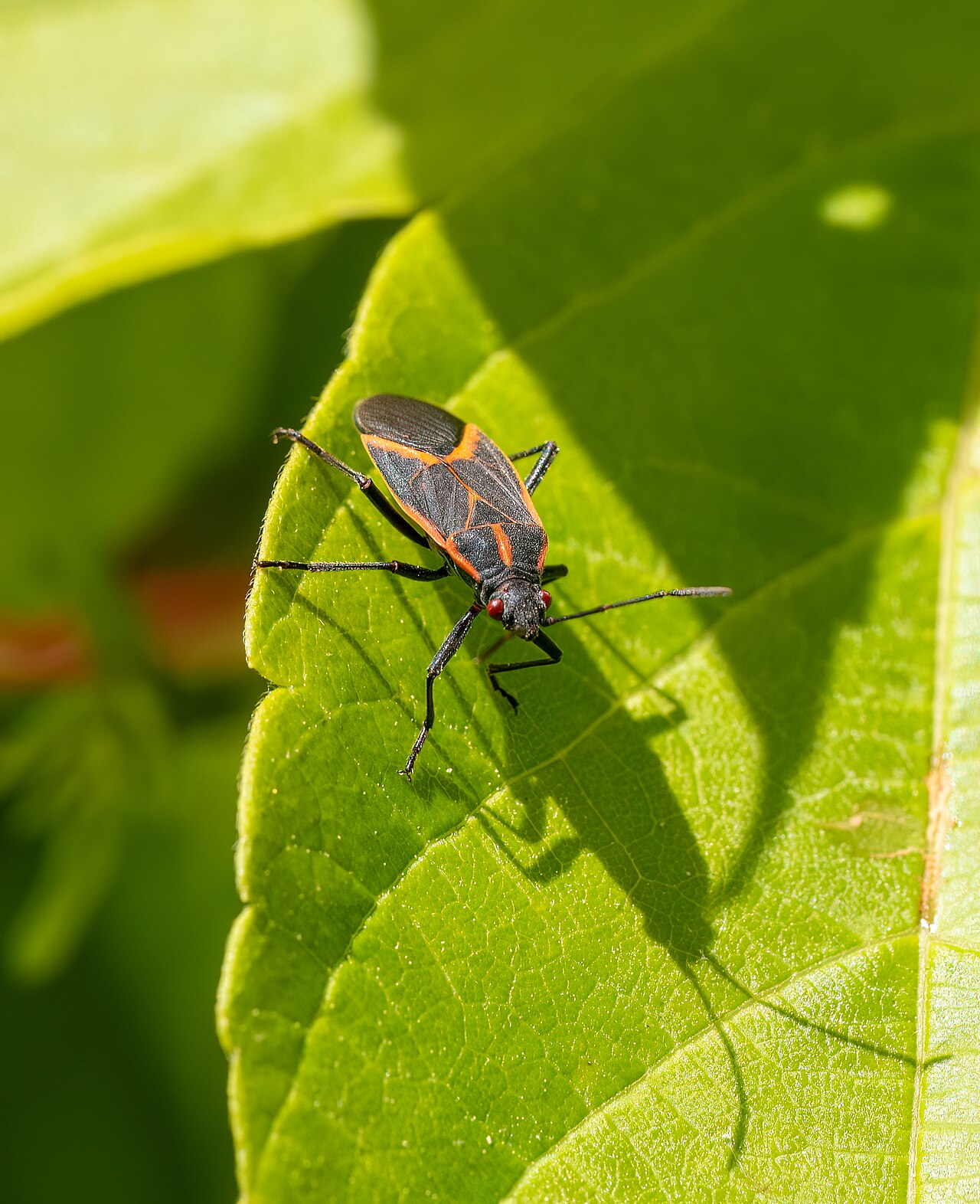
If you live in Council Bluffs, you know the black and orange bugs that blanket the south side of the house every fall. Boxelder bugs are harmless but maddening, and once they work into the walls they trickle indoors all winter. Here is why they swarm the way they do, how they get in, and why the fix is about the outside of the house and the timing.
Why they swarm the sunny walls
Boxelder bugs spend the warm months feeding on the seeds of boxelder and maple trees, which are common across the Council Bluffs area. Through spring and summer they are spread out in the trees and go mostly unnoticed. The behavior that makes them a household pest kicks in during fall, when cooling temperatures trigger them to find a sheltered place to overwinter as adults.
They are drawn to warmth, so they gather on the surfaces that hold the afternoon sun: the south and west walls of houses, garages, and sheds. On a mild fall day you can see hundreds massed on the warm siding. From there they probe every crack and gap, working into the wall voids, attic, and around windows to wait out the winter. They do not feed, breed, or cause damage indoors; they are simply sheltering, which is what makes them so hard to reason with once inside.
How they get inside
Boxelder bugs get in through the same gaps that let heat escape: worn weatherstripping around windows and doors, cracks in the siding, gaps at the sill plate, spaces around utility penetrations, and openings at the soffits and roofline. Older homes with settled construction and more gaps tend to take on more of them, but any house with sunny walls and a few openings will collect them.
Once they are in the wall voids and attic, they trickle into the living space through the winter, showing up at windows and in upstairs rooms, and again in spring when they try to get back out. Vacuuming the ones you see helps with those individuals but does nothing about the hundreds tucked into the structure, which is why indoor efforts always feel like they never end.
What actually reduces them
The effective approach is exterior, and it is timed to fall before they cluster. Sealing the gaps around windows, doors, siding, the sill plate, and utility lines closes the routes they use, and an exterior perimeter treatment of the sunny south and west walls, the eaves, and the entry points in late summer or early fall stops the wave at the surface. An experienced local exterminator times that treatment to the season, because once the bugs are inside the walls, options are limited.
Indoor spraying is the wrong tool, since it does little against a population protected in the wall voids and can leave dead insects in the walls. The realistic plan is prevention on the outside each fall. For a home that gets them every year, the exterior treatment plus sealing becomes a routine that heads off the invasion rather than fighting it at the window all winter.
What not to bother with
It is tempting to reach for a spray can when the wall is covered, but a contact spray on the siding kills the bugs it hits and does nothing about the constant arrivals or the ones already inside. Heavy indoor spraying is worse, because the bugs are protected in the structure and dead insects in the wall can draw other pests. Neither addresses the reason they are there.
The steps that pay off are the unglamorous ones: seal the gaps, time an exterior treatment to early fall, and keep up with it each year. Removing or replacing boxelder and maple trees is sometimes suggested, but it is rarely practical or worth it, since the bugs travel from trees well beyond your own yard. Sealing and timing beat trying to remove the food source.
References
Have this problem now? Call 712-220-7876 and describe it.
Related services
Get this one handled
Talk to a local exterminator
Call and describe your pest problem
Tell us the pest, the property and how long it has been going on. You get straight answers and an honest estimate before any work starts. No obligation.
Calls answered 7am to 9pm, seven days a week